
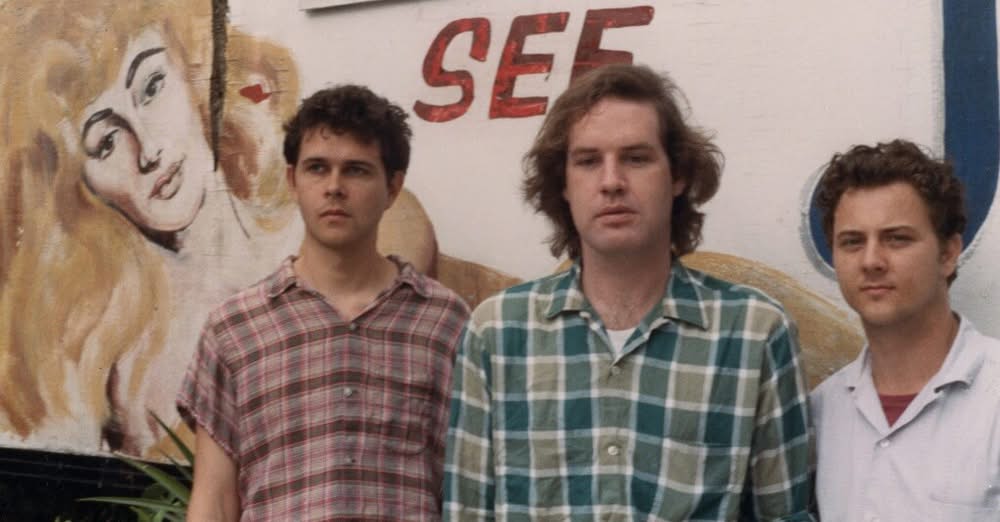
When the Beggar Weeds were touring the country back in the late 1980s and early 1990s, they would
drive hours out of their way to visit some bizarre roadside attraction or eat at the perfect greasy-
spoon diner. “We were living on five bucks a day, but we would drive for miles in the wrong direction
and use up so much gas just to visit the Nut Lady in Old Lyme, Connecticut.” says Alan Cowart, who
plays drums for the Jacksonville, Florida, trio. The band loves the unexpected and finds inspiration
in those little quirks of Americana nestled in the remotest corners of the country.
Beggar Weeds write songs about little tragedies: nothing as big as a presidential assassination, but
more mundane injustices, more common disappointments. They find everyday tragedies in growing
up (“Graduating”), suffering your family’s prejudices (“Daddy’s Little Angel”), reckoning with your
roots (“Picolata”), and the accumulation of unwanted stuff at the local garbage dump (“Sunbeam
Mountain”). Their songs sound like only these three young men from the Sunshine State could have
dreamed them up.
Musically, the band are collectors and connoisseurs of the offbeat, taking parts from their favorite
bands—the jangle of R.E.M., the almost-falling-apart-ness of the Replacements, the rumbling
melodicism of Hüsker Dü—and combining them with hardscrabble country and rustic folk. Then
they play it all loud and fast. “We want to do something different, play a little harder, chase our own
ideas,” says Watson, who sings and plays guitar and harmonica. “We’re combining all those things,
punk but also pop and country and folk. I remember someone described us as the Everly Brothers on
speed.”
Opening for national acts that came through Jacksonville—including X, the Meat Puppets, the Dead
Milkmen, and drivin n cryin—the trio very quickly developed a reputation for rambunctious shows
where anything could happen and often did. They dance and shimmy constantly, switch instruments
with each other, and emphasize volume, speed, feral energy. “We have to pick the right shoes,” says
Leuthold. “We need to find shiny bottom shoes so we can move around more smoothly.
On the strength of the live reputation and their EP, the trio toured around the South and further
afield, often sharing the bill with their friends the Chickasaw Mudd Puppies. That Athens, Georgia,
band was working on an album with Michael Stipe, and singer Brant Slay played Sure Pants Alot for
the R.E.M. frontman. He was instantly smitten. The band holed up with Stipe and filmmaker Jim
McKay at John Keane Studios in Athens, Georgia, where they recorded six songs. Songs like “Linden
& Mary” (about the hoarders next door) and “Picolata” (about a town between St. Augustine and
Jacksonville) retain their essential eccentricities, while “Ship” combines Cowart’s hoedown with
Leuthold and Watson’s Byrdsy harmonies to create an unexpectedly majestic chorus.
Tragedy in U.S. History today sounds unique in its combination of sounds and personalities, the
missing link between the underground music scene of the 1980s and the alt-country movement of
the 1990.